This post provides tips for practicing radical self-care for chronic illness. Taking care of yourself is critical whenever you are in a role where you give of/up your own energy, such as parenting, caregiving, or working in a helping profession. And this includes being your own caregiver when you have a chronic illness. Being sick takes tremendous energy, and it can often feel like you don’t have the energy to take care of yourself, let alone add in self-care.
As an Amazon Associate, I earn from qualifying purchases.
Table of Contents
- Self-care for chronic illness – practices for survival
- Self-care for chronic illness – create a routine
- Self-care for chronic illness – consider your lifestyle limitations
- Get my free recipe ebook, symptom log, and 2-week meal plan!
- Self-care for chronic illness – make it part of your daily routine
- What works for you?
Who is Betsy Leighton?
I’m a writer, blogger, and healer dedicated to helping individuals reconnect with their innate peace and wholeness by healing nervous system dysregulation. My personal experience with chronic illness called Mast Cell Activation Syndrome (MCAS) shapes my work, and my content offers tools to empower those with chronic illness to improve their well-being and take charge of their health.
I created the Sacred Self-Healing Method and am a trained and certified Safe and Sound Protocol provider, an author, blogger, and A Course in Miracles Teacher. I hold a Master of Divinity in Spiritual Counseling and am a trained spiritual mentor, with certificates in sound healing, aromatherapy, nutrition, and Sacred Deathcare. I offer a self-study certificate program in the Sacred Self-Healing Method, provide spiritual counseling and coaching, courses, and supported subscriptions for the Safe and Sound Protocol.
What is MCAS?
Mast Cell Activation Syndrome (MCAS) is a chronic condition that affects all organ systems. It can cause severe, disabling symptoms every day, including potentially fatal anaphylaxis. MCAS often occurs with other chronic conditions like Ehlers-Danlos Syndrome (EDS) and Postural Orthostatic Tachycardia Syndrome (POTS). Managing MCAS is challenging because many healthcare providers are unaware of it, and diagnostic tests can be unreliable. Treatments include antihistamines and mast cell stabilizers, as well as avoiding triggers. Check out this post on managing MCAS.
Radical self care
Radical Self-Care is the term I coined after Cheri Huber’s audio program called Radical Self-Acceptance. Huber’s term “radical” speaks to the need to go beyond societal norms, emphasizing ideas that aren’t intuitive or lack social credence.
Taking care of yourself is critical whenever you are in a role that requires giving of your own energy, such as parenting, caregiving, or working in a helping profession. And this includes being your own caregiver when you have a chronic illness. Being sick takes tremendous energy, and it can often feel like you don’t have the energy to take care of yourself, let alone add in self-care. This post provides tips for starting and maintaining a radical self-care practice when you have a chronic illness.
Intention
Sacred Self-Healing relies on intention and frequency. Intention directs frequency to bring about healing. The universal formula for healing is:
Intention + Frequency = Healing.
In this expression, “frequency” refers to the specific healing modality being applied. Setting an intention is particularly beneficial when utilizing self-healing methods such as frequency and forgiveness. This post covers more information on the power of intention.
Beneficial Frequency
Beneficial frequency refers to natural vibrations that synchronize biological and Earth systems, to support overall harmony. For instance, visible red and blue light from the sun are beneficial frequencies because they regulate circadian rhythms. Likewise, Earth’s Schumann resonance is a naturally occurring frequency that aligns internal and external rhythms for health. This post discusses beneficial frequency in more depth.
Forgiveness
Forgiveness, like love, is seen as a high-frequency energetic state connected to compassion and gratitude. In contrast, emotions such as resentment and anger are thought to have lower frequencies, constricting rather than elevating well-being. Forgiveness helps elevate energy, promote emotional healing, and support physiological balance. Science hasn’t measured the frequency of forgiveness, but studies show that forgiveness can improve heart and brain patterns and help the body work more smoothly. Forgiveness brings balance, healing, and peace—both emotionally and physically. This post delves deeper into forgiveness.
Self-care for chronic illness – practices for survival
Self-care practices need to fill you up. If you find yourself in a caring role or are going through an intense chapter in your life, treat your self-care needs as “musts.” Do you need alone time? By getting up an hour earlier than others in your household or staying up a little bit later, you might carve out that time alone. Do you need physical contact? Find a way to ask for hugs or schedule regular bodywork for yourself. Are you physically exhausted and need to take a nap every day? Set up a break in your day to accommodate a nap, whether that involves hiring a babysitter or respite caregiver, arranging your lunch break during your workday when you can rest uninterrupted (even under your desk!), or going out to your car for twenty minutes each afternoon.
Self-care for chronic illness – create a routine
Here is a partial list of some ideas for Radical Self-Care to use as a starting point to create your own daily Radical Self-Care routine:
- Spend time in nature
- Do gentle or restorative yoga
- Talk a walk
- Use essential oils for energetic balancing
- Say “no” when necessary, and don’t feel guilty
- Take a bath or a foot bath
- Have a sauna
- Make sure you’ve had enough protein
- Sing in the shower, in your car, or listen to your favorite music
- Take ten deep breaths before eating each meal to initiate the parasympathetic response
- Draw, color, paint, make a collage, play with clay
- Keep a budget – with a line item for personal/self-care – I recommend the program YNAB
- Get a massage, shiatsu, or acupuncture
- Meditate
- Walk a labyrinth
- Use natural stress-relieving aids like CBD oil, essential oils, melatonin for sleep, or herbs for emotional balance.
- Laugh – watch funny videos, seek out joy
- Eat healthy foods
- Have a cup of tea
- Talk to a counselor or trusted advisor
- Connect with your significant other or a close friend
- Limit your screen time
- Read a book
- Take part in a spiritual practice
- Get a facial, manicure, or pedicure
- Avoid toxic people
- Take a nap
- Sew, quilt, knit, or crochet
- Think of something you are grateful for
- Intentionally schedule “me” time on your calendar
- Listen to a podcast
- Unplug from social media for an hour, a day, or a week
- Clean one room in your house
- Wear colors that make you feel good
- Journal
- Start a forgiveness practice
- Allow yourself to feel your feelings in real-time
- Cultivate self-love
- Ask a friend to tell you three things that they like about you
- Learn mindfulness
- Read feel-good poetry (try Rumi or Hafiz)
- Keep a box filled with thank-you cards and affirming notes you have received from others as reminders of the love you share in the world.
- Volunteer or give to a cause that matters to you
- Find out whether you are an introvert or an extrovert and make choices based on that information.
- Tidy your bedroom
- Post inspiring quotes or affirmations on your mirror
- Drink more water
- Stretch
- Spend 10 minutes in the sun
- Pet your dog or cat
- Self-soothe when you are upset – eg, stroke your arm or hug yourself.
- Go on a solo retreat
- Cook or bake
- Plant something
- Eat your favorite comfort foods
- Buy yourself flowers
- Get rid of or replace clothing that doesn’t fit or that you don’t like
- Hire someone to do something you don’t have time for or trade skills
- Light candles
- Treat yourself to a small luxury
- Give yourself a hand or foot massage
- Drink hot cocoa
- Put up fairy lights
- Watch clouds
- Ask for help
- Have a picnic
- Have a game night
- Smile
- Take a road trip
- Do a 10-minute body scan
- Pray
Self-care for chronic illness – consider your lifestyle limitations
Your Radical Self-Care routine needs to fit with your lifestyle, your resources, the limitations of your illness, and the demands on your time.
- Think about which of your existing self-care practices bring you joy/peace/happiness, and if you can expand those or create new practices with the elements of those practices that work with your life.
- Next, consider whether you can improve or even drop any of your existing self-care practices that don’t increase your well-being. Can you add music, a friend, a flavor, an app, change the time of day, etc.?
- Then, ask yourself which practices you would like to integrate into your life because they would increase your well-being. Ponder: What is necessary to make it happen? What is realistic? What outside support might you need?
Self-care for chronic illness – make it part of your daily routine
I’ve talked about the benefits of having a daily routine when you have MCAS or other chronic illnesses in this post. Once you’ve committed to Radical Self-Care, it helps to create the infrastructure to make it happen regularly. Here are some tips for doing that:
- Bookend your day with self-care practices that feed your soul, so you open and close it with activities that create a rhythm. Your morning self-care routine can help prepare you for your day, such as meditation, yoga, movement or exercise, reading, or walking the dog. Evening self-care routines can help wind down and prepare for sleep, such as taking a bath, meditating, listening to music, praying, lighting candles, or having a cup of tea.
- Allow for flexibility in your self-care routines. Whenever possible, do them. When it’s not possible, or out of your control, try to do one self-care element, or don’t sweat it.
- Try to limit your consumption of sugar, controlled substances, and screen time to other times, so that self-care is purely focused on nurturing your wholeness and being present with yourself.
- Radical Self-Care is about nurturing and supporting yourself so you can function at your best. It’s not a contest. It’s not about what you “should” do.
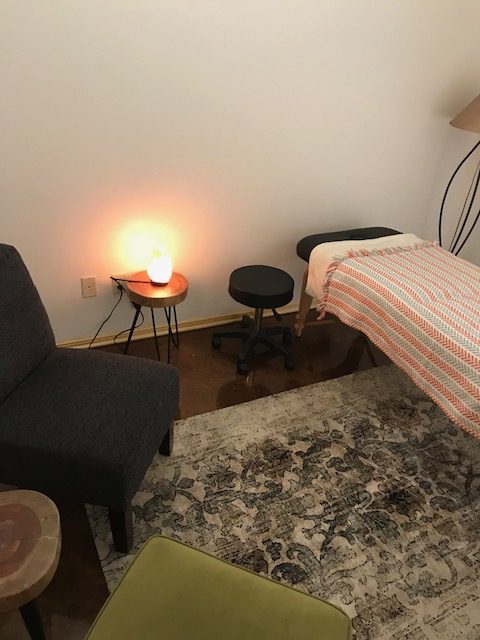
- Set up a self-care station in your home with items that will remind you of the desire to self-nurture. For instance, have a cozy blanket, cushions, chocolate, candles, a yoga mat, a music speaker, a book, knitting supplies, art supplies, or other items to make your self-care station comfortable and inviting.
The bucket theory
The bucket theory simplifies understanding symptom reactions with MCAS. Imagine your body as an empty bucket you don’t want to overflow. Reactions to various stimuli fill the histamine bucket at different rates, forming the total histamine level (how full your bucket is). More histamine means more symptoms. By managing triggers, reducing exposures, and taking medications and supplements, you can control your bucket’s level.
Know your typical symptom progression
Understanding your symptom progression during a flare is key to developing your rescue plan. This post discusses how to recognize symptom progression so you can be prepared to address them.
Get my free ebook, symptom log, and meal plan!
Want a tool to easily track your symptoms?
Check out these circadian health tools!
I’m an affiliate with Bon Charge, a company that makes tools for circadian health, and you can receive 15% off your order with my coupon code BETSYL.
Bon Charge offers tools such as yellow– and red-tone blue-blocking glasses, red light therapy devices, PEMF mats, infrared saunas, and EMF-blocking products.
Sign up for the SSP!
I’ve found the Safe and Sound Protocol (SSP) to be the most helpful bottom-up healing strategy if your nervous system has been overloaded with toxic exposures, including mold or non-native EMFs, chronic infections, concussions, stress, or trauma. The SSP is a passive listening therapy based on Polyvagal Theory that helps heal nervous system dysregulation. Many people with MCAS and other chronic conditions have nervous system dysregulation stemming from infections, toxic exposures, concussions, and trauma. The SSP is an easy-to-use app that lets you listen to specially filtered music for 30 minutes each day as part of a 5-hour cycle. Studies show the SSP has a profound effect on mental health and chronic conditions. Here’s a short podcast describing the Safe and Sound Protocol.
You can sign up for the SSP here!
Heal your mind!
While the SSP is a bottom-up, somatic therapy for healing the nervous system, the Sacred Self-Healing Method I offer is a top-down nervous system-healing modality that focuses on cognition, attention, perception, and emotion, using the mind’s higher functions. The SSP and the Sacred Self-Healing Method complement each other and together produce lasting results. Here’s a short podcast on my self-healing practice.
I provide one-on-one in-person and remote chronic illness and caregiver coaching, as well as Sacred Self-Healing Sessions based on the Sacred Self-Healing Method, a proven, novel co-creative healing modality detailed in my Books.
Order my books!
Here’s a short podcast highlighting my five books.
My latest book, Living In The Light: Healing with Forgiveness, Sound, and Light, is all about the tools that have been most helpful for me to heal: forgiveness, sound, through nervous system retraining using the Safe and Sound Protocol, and light, through entraining my circadian rhythm with the energy of the sun. Living In The Light is available here!
Rocks and Roots chronicles my solo backpacking journey on the Superior Hiking Trail and my efforts to overcome nervous system dysregulation, gut dysbiosis, and Mast Cell Activation Syndrome symptoms to complete the 328-mile hike successfully.
The Sacred Self-Healing Method ebook is available here and in most ebook retailers!
The Sacred Self-Healing Workbook is available for purchase here!
Betsy’s first book, Sacred Self-Healing: Finding Peace Through Forgiveness, is available here
Companion Recordings
The companion audio recordings of chants, guided meditations, and sound healing demonstrations that accompany the Sacred Self-Healing Method are available for free on my YouTube channel here
What do you think?
I’d love to have your reply below!
Disclaimer
The preceding material does not constitute medical advice. This information is for information purposes only and is not intended to be a substitute for professional medical advice, diagnosis, cure, or treatment.